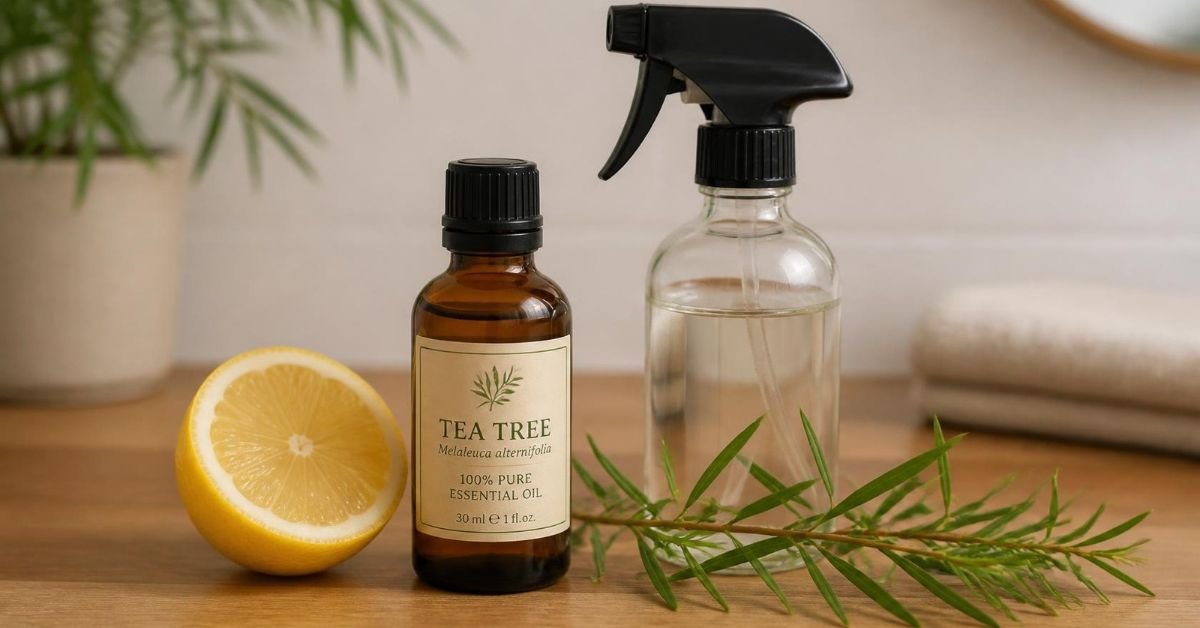
Tea Tree Oil Uses: The Simple Swap for a Cleaner, Gentler Home
Open the cabinet under most kitchen sinks and you’ll find the same crowd.
A jug of bleach. A spray that says “danger” in small print. Something blue that smells like a swimming pool. And usually, a child-safety latch holding the whole thing shut.
Erin knows that cabinet better than most. She spent years as a hair stylist until the chemicals in the salon started making her sick. She walked away from that career… and it wasn’t long before she started looking hard at what was under our own sink.
One of the first bottles that moved in was tea tree oil.
It’s small. It’s strong. And it does a surprising amount of the work those harsh sprays were doing.
We’ve been living the natural way for about 30 years now, and tea tree has never left our cabinet. It’s one of the most studied oils out there, which makes it a great place to start if you’re cleaning up your home one swap at a time.
Below, I’ll walk you through where tea tree comes from, what’s inside it, and what the research actually says. Then I’ll share four simple recipes our family uses, plus the safety rules that matter most, especially if you have kids or a cat.
Where It Comes From
Tea tree oil comes from the leaves of Melaleuca alternifolia, a papery-barked shrub that grows wild in the swampy coastal country of New South Wales, Australia.
The Bundjalung people of that region knew its value long before anyone bottled it. They crushed the leaves and used them on cuts and skin troubles.

The name came later. Captain James Cook’s crew brewed the leaves into a tea in the 1770s, and the nickname stuck.
Here’s the part most people don’t know.
In the 1920s, an Australian chemist named Arthur Penfold tested the oil and found strong germ-fighting power. By World War II, the Australian Army considered it so important that leaf cutters were excused from military service to keep production going. Soldiers carried small bottles in their first-aid kits.
That’s quite a track record for a little swamp shrub.
What Does Tea Tree Oil Actually Smell Like?
Let’s be honest… tea tree is not a perfume oil.
It smells fresh, sharp, and medicinal, a little like pine needles crushed in your hand, with a spicy, almost camphor-like edge. Some people say it smells like a clean doctor’s office. Others say it smells like a campground after rain.
Either way, it smells clean. That’s a big reason it works so well in cleaning recipes.
Here’s a tip. If the scent is too much on its own, a few drops of lemon or lavender soften it fast. Tea tree plays well with others.
What’s Actually in It?
Tea tree oil contains about 100 natural compounds. A few of them do most of the heavy lifting.
- Terpinen-4-ol is the star. Most good tea tree oil is roughly 30–48% terpinen-4-ol, and research points to it as the main source of the oil’s germ-fighting and skin-calming effects.
- Gamma-terpinene and alpha-terpinene are supporting compounds that help round out the oil’s cleaning power.
- 1,8-cineole is the same compound that gives eucalyptus its punch. In quality tea tree oil, it’s kept low, since higher amounts are more likely to bother skin.
One more compound is worth knowing about.
P-cymene rises as tea tree oil ages and is exposed to air. Old, stale oil carries more of it, and that’s when skin reactions become more likely. More on that in the safety section below.
What People Use Tea Tree Oil For
Tea tree is best known as a germ-fighting oil. Families reach for it in two places: around the house and in simple skin and hair care.
Here’s what the evidence looks like for each.
Around the house. Tea tree is a go-to for natural cleaning sprays, and there’s real lab research behind that. In a 2015 lab study, tea tree oil slowed the growth of common household mold better than vinegar or rubbing alcohol did.
That’s a lab result, not a real bathroom. But it lines up with what a lot of families notice: a tea tree spray on shower grout seems to keep mildew from coming back as fast.
Blemishes. This is where the research gets solid. In a well-known 1990 study, 124 people with mild to moderate acne used either a 5% tea tree gel or 5% benzoyl peroxide, a common drugstore acne cream.
Both cut down the number of blemishes. Tea tree worked more slowly… but people using it had fewer side effects like dryness and itching.
Dandruff and itchy scalp. In a 2002 study, 126 people washed their hair daily with a 5% tea tree shampoo or a plain shampoo for four weeks. The tea tree group saw a 41% improvement in dandruff, compared to 11% for the plain shampoo.
Even so, very few people were completely dandruff-free by the end. It seems to help with ongoing use, not as a one-time fix.
Freshening shoes, gym bags, and laundry. This one is mostly everyday wisdom rather than research. Plenty of families add a few drops to the wash or a sachet in smelly sneakers and like the results. Ours included.
Notice something? In every study, tea tree was diluted. Nobody was dabbing straight oil on their face. That’s the single biggest lesson here.
Easy Ways to Use It at Home
Here’s a quick look at the most practical ways to put tea tree to work, no complicated setup required.
- Kitchen counters: Add it to a simple vinegar-and-water spray for a fresh, clean wipe-down.
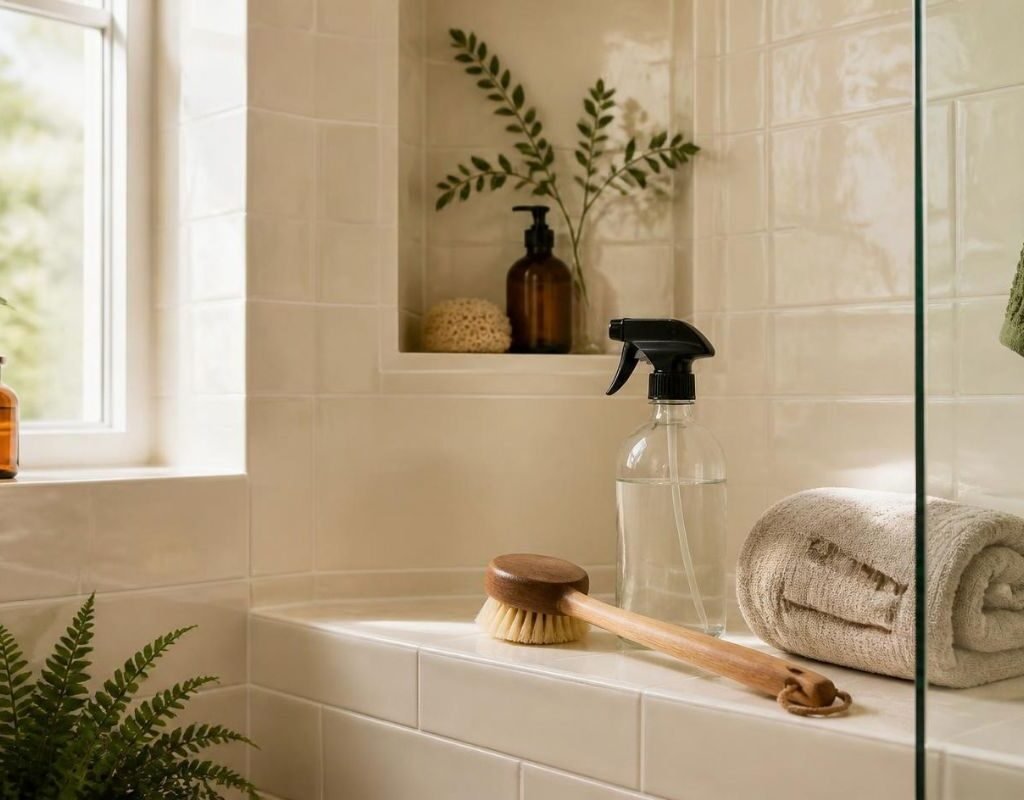
- Shower and grout: Spray a diluted mix on damp corners after showers to help discourage mildew.
- Laundry: Add a few drops to your detergent for towels, gym clothes, or that musty load you forgot in the washer.
- Trash cans: Put a drop or two on a cotton ball at the bottom of the bin to keep odors down.
- Blemish care for teens and adults: A small, well-diluted dab on a spot, never straight from the bottle.
How to Use It Safely
Tea tree is one of the more forgiving oils, but it still deserves respect. Here’s what I’d tell a friend before she heads home with her first bottle.
Always dilute for skin. For everyday skin use, about 1–2 drops per teaspoon of carrier oil (like jojoba or fractionated coconut oil) is plenty. For a small spot on a teen or adult, you can go up to about 5 drops per teaspoon, which matches the strength used in the acne research. Patch test on your inner arm first.
Never swallow it. Tea tree oil is toxic if swallowed, even in small amounts. It can cause confusion and loss of coordination. Keep bottles up high and capped tight, just like you would with medicine.
Keep it fresh. Old, air-exposed tea tree is much more likely to irritate skin. Store it in a dark glass bottle with the lid on tight, in a cool spot. Use opened bottles within about a year. If it smells harsh or “off,” move it to cleaning duty or toss it.
This is also why we’re picky about where our oils come from. The bottle in our cabinet is Young Living, and their Seed to Seal standards are a big reason we trust what’s inside. With tea tree, freshness and purity matter more than usual.
Cats: avoid it completely. Tea tree oil is toxic to cats. Don’t apply it to them, don’t diffuse it where they spend time, and keep them out of rooms you’ve just cleaned with it until surfaces are dry and aired out.
Dogs: use real caution. Never put undiluted tea tree on a dog. Many pet poisonings have come from concentrated oil applied directly. Talk to your vet before using any tea tree product on pets.
Babies and young children. Don’t use tea tree on babies. For older children, use a very light dilution (1 drop per teaspoon or less) and check with your pediatrician first.
Pregnancy. Many aromatherapists suggest caution with tea tree, especially in the first trimester. Talk with your provider before using it on your skin.
Recipe-specific notes: Lemon oil, like other citrus oils such as orange, can make skin more sensitive to sunlight, so don’t use the counter spray below on skin before going outside. And vinegar-based sprays can etch natural stone like granite or marble.
I’m sharing what our family has learned over the years, not medical advice. If you have a skin condition or health concern, talk with a qualified provider.
Some Blends Worth Making
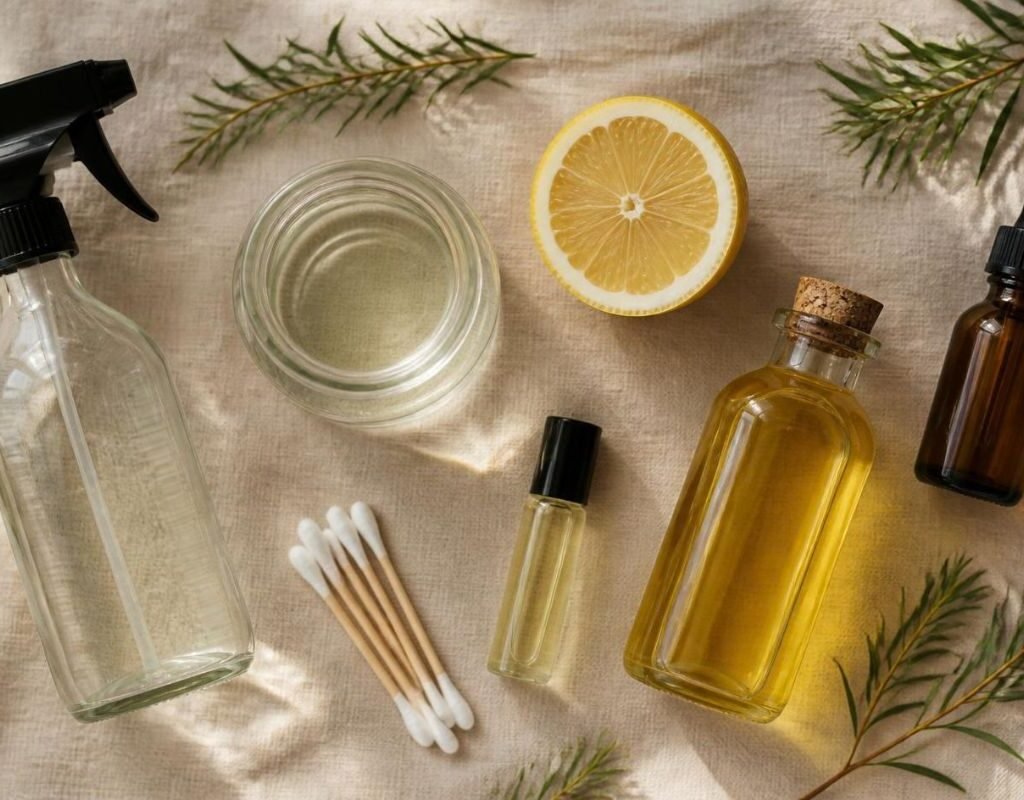
These are four recipes we come back to again and again. Start with whichever one fits the biggest need in your home.
Fresh Start Counter Spray
An everyday kitchen and bathroom spray that cleans without the chemical fumes.
- 1 cup water
- ¼ cup white vinegar (cuts grease and grime)
- 15 drops tea tree (the germ-fighting backbone)
- 10 drops lemon (brightens the scent and helps cut grease)
Combine in a glass spray bottle and shake before each use, since oil and water separate. Spray, let it sit a minute, then wipe.
Safety note: For surfaces only. Lemon can make skin sun-sensitive, and vinegar can etch granite and marble. Keep cats out of the room until counters are dry.
Shower Mildew Spray
A simple spray to help keep mildew from creeping back into grout and corners.
- 1 cup water
- 1 teaspoon tea tree (the mold-fighting workhorse)
Mix in a glass spray bottle and shake well. Spray on damp grout or shower corners, let it sit for about an hour, then wipe or rinse. Use it a couple of times a week to stay ahead of mildew.
Safety note: This is a strong mix. Wear gloves, open a window or run the fan, and keep pets out until it’s dry. For large or spreading mold, call a professional.
Clean Home Diffuser Blend
A bright, fresh scent for the kitchen or mudroom after a long day.
- 2 drops tea tree (fresh and clean)
- 2 drops lemon (bright and cheerful)
- 2 drops lavender (softens tea tree’s sharp edges)
Add to your diffuser with water per the manufacturer’s directions. (New to diffusing? Here’s how to diffuse essential oils.) Run it for 30 to 60 minutes with a door or window cracked.
Safety note: Don’t diffuse in rooms where cats spend time, and keep diffusing short and light around babies and young children.
Gentle Spot Dab
A diluted tea tree dab for the occasional blemish, for teens and adults.
- 1 teaspoon jojoba oil (light and gentle on skin)
- 3–5 drops tea tree (the ingredient studied for blemishes)
Mix in a small dropper bottle. Use a cotton swab to dab a tiny amount on a spot once or twice a day. Keep it away from eyes, and stop if your skin gets red or itchy.
Safety note: Patch test first. Not for babies or young children, and check with your provider if you’re pregnant.
Quick-Reference Blend Card
| Recipe | Oils & Drops | Base | Best For |
|---|---|---|---|
| Fresh Start Counter Spray | Tea tree 15 · Lemon 10 | 1 cup water + ¼ cup vinegar | Kitchen and bathroom surfaces |
| Shower Mildew Spray | Tea tree 1 tsp | 1 cup water | Grout and shower corners |
| Clean Home Diffuser Blend | Tea tree 2 · Lemon 2 · Lavender 2 | Diffuser + water | Freshening the house |
| Gentle Spot Dab | Tea tree 3–5 | 1 tsp jojoba | Occasional blemishes (teens and adults) |
Always dilute before skin use and patch test first. Never swallow tea tree oil. Keep away from cats. Lemon can make skin sun-sensitive. Ask your provider before using on children or during pregnancy.
Questions People Ask About Tea Tree Oil
Can I put tea tree oil straight on a blemish? I wouldn’t. Straight oil is the most common cause of skin reactions, and the studies that showed results used a 5% mix. The Gentle Spot Dab above gets you to about that strength.
Can tea tree oil replace bleach completely? For everyday wiping and freshening, it does a great job for our family. But it isn’t a registered disinfectant, so when someone’s sick or you’re cleaning up after raw meat, use a proven disinfectant for that job.
Is tea tree safe to use around my kids? Around the house, yes, with common sense: keep bottles out of reach, let surfaces dry, and never let little ones swallow it. For skin, skip it on babies and talk to your pediatrician before using a light dilution on older kids.
Can I diffuse tea tree if I have a cat or a dog? With cats, no. Their bodies can’t break down tea tree compounds well, so it’s best kept out of their space entirely. With dogs, keep diffusing light, make sure they can leave the room, and ask your vet first.
How do I know if my tea tree oil has gone bad? Fresh tea tree smells clean and herbal. If it smells sharp, sour, or “off,” or it’s been open for more than about a year, retire it from skin care. It can still freshen a trash can.
Is tea tree safe during pregnancy? There isn’t much research here, so many aromatherapists suggest caution, especially early on. Using it in a cleaning spray is a different thing from putting it on your skin, but your provider is the right person to ask.
Free guide: If tea tree is your first step toward a cleaner cabinet, our free guide, Your First 10 Essential Oils, walks you through the other nine worth keeping close, with simple uses and dilution charts for each. Get the free guide →
Before You Go
Tea tree is the kind of oil that earns its spot quietly. It won’t win any perfume contests. But it cleans, it freshens, and it has more research behind it than almost any oil on the shelf.
If you’re starting to swap out what’s under your sink, this is a great first bottle. Pick one recipe this week and see how it fits your home.
For more guides, blends, and deep dives, head over to oilsforliving.us. It’s built to be the resource I wished I had when I was starting out.
A quick note before you go: I’m not a doctor or certified aromatherapist, just someone who’s spent a lot of years using these oils at home and learning alongside my wife. Nothing in this article should be taken as medical advice. Essential oils are powerful and worth learning about, but if you have a serious health condition, please talk to a qualified healthcare provider. Always dilute before applying topically, and do a patch test first.
— Max
Save this for later: Pin the recipe card below so it’s there the next time you clean.