The project had been sitting on my desk for three days.
Not because I didn’t have time. I had the time. I just kept sitting down in front of it and… nothing. That specific kind of mental fog where you’re technically awake but your brain is running about two steps behind where you need it to be.
I’d already had my coffee. I wasn’t tired. I just couldn’t seem to get traction.
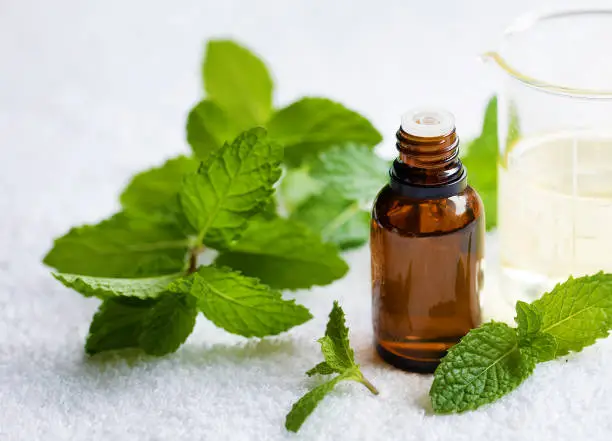
I picked up the bottle of peppermint almost without thinking. Uncapped it, held it a few inches from my nose, took a slow breath in.
The shift was almost immediate. Not dramatic. Not magical. Just… present. Like something had clicked back on.
I know that sounds like a lot to pin on a few molecules of menthol. But once you understand what peppermint is actually doing to your nervous system, it stops sounding strange and starts sounding like basic biology.
I’ve been using peppermint essential oil for years — in the diffuser, in topical blends, in the stomach rub I reach for after a big dinner. But the focus angle is where it surprises people the most. Here’s everything I’ve learned: what’s in it, why it works, and the specific blends I reach for when I need my brain to actually show up.
Where It Comes From
Peppermint isn’t a naturally occurring plant — it’s a hybrid. Watermint and spearmint crossed sometime in the 1600s or 1700s, most likely in England, and the result was a plant with a menthol content that neither parent could match on its own.
By the 1700s, farmers in Mitcham, Surrey were growing fields of it for distillation, and “Mitcham peppermint” became the gold standard for apothecaries across Europe. Dried peppermint leaves have also been found in Egyptian tombs dating to around 1000 BC — and one of the oldest medical texts we have lists it as a treatment for digestive complaints.
Peppermint isn’t a wellness trend. It’s been earning its place for a very long time.
What Does Peppermint Actually Smell Like?
There’s a reason peppermint is one of the most recognizable scents on the planet. It’s sharp, it’s clean, and it hits fast — that immediate coolness that spreads from your nostrils upward the moment you inhale.
It’s more complex than it first appears, though. Up front: bright, almost piercing, with that distinctive icy quality.
As it settles: something slightly green and herbaceous beneath the menthol shows up — a little earthy, a little sweet. It doesn’t linger the way some oils do.
Peppermint moves through and out, which is actually part of why it works so well as a focus trigger. It’s alert without being heavy.
If you’ve ever opened a fresh tin of peppermint tea or unwrapped a peppermint candy and felt that immediate lift — that’s the menthol doing exactly what it’s designed to do.
What’s Actually in It?
Peppermint essential oil is made up of dozens of natural compounds, but three do most of the work when it comes to focus and clarity.
~Menthol is the main one — making up 35–55% of the oil. It’s what creates that cooling sensation when you inhale, and it’s what your brain responds to. When menthol hits the nerve receptors in your nose, your brain wakes up a little. That’s not in your head — it’s basic biology. Most of the focus research on peppermint is tied to menthol.
~Menthone comes in second, at around 10–35%. It’s what gives peppermint its sharp, bright edge — and it has some natural germ-fighting properties too. It works alongside menthol to create that unmistakable intensity.
~1,8-Cineole rounds out the trio.
You’ll also find 1,8-Cineole in eucalyptus and rosemary. Research has linked this compound to better focus and mental sharpness — which helps explain why peppermint feels energizing, not just pleasant.
The exact mix of these compounds changes depending on where the plant is grown and how the oil is made. Steam distillation — running steam through the plant material to pull out the oil — is the standard method, and it does the best job of keeping those key compounds intact.
What People Use It For (and What the Research Says)
This is where it gets interesting — especially if you like knowing the why behind something, not just the what.
A 2019 study found that people who wore a peppermint-scented patch for six hours did noticeably better on memory and attention tests than those wearing a plain patch. That’s not just “I felt a little more alert.” That’s a real, controlled study with measurable results.
Other research has shown similar results when people took peppermint oil in capsule form before mental tasks. Participants stayed sharper longer and reported less mental fatigue. The evidence is still growing, but it keeps pointing the same direction.
For tension headaches, multiple studies have found that applying a 10% peppermint oil solution to the temples and forehead works about as well as common over-the-counter pain relievers. That’s a finding worth knowing.
But honestly — for me personally, stomach support is where peppermint earns its place more than anywhere else.
The research here is strong. Multiple large studies have confirmed that peppermint oil can significantly reduce IBS symptoms — bloating, cramping, abdominal pain. Roughly 40–50% of people using it reported real improvement, compared to 20–30% on a placebo.
Here’s why it works: menthol relaxes the muscles that line your gut, calming the spasms that cause cramping. Think of it as a natural muscle relaxer — just for your digestive system.
For everyday stomach upset — not a diagnosed condition, just that heavy after-dinner feeling or a random bout of indigestion — diluted peppermint oil rubbed clockwise on the abdomen is something a lot of people in the oils world swear by. I’m one of them. And a single drop in a mug of hot water has become my other go-to. More on that in the Q&A below…
Easy Ways to Use It at Home
Here’s a quick look at the most practical ways to put peppermint to work — no complicated setup required.
- Diffuse it in the morning. Add 3–5 drops to your diffuser with water and run it while you work, read, or get your day started. It’s one of the simplest ways to sharpen focus right away.
- Make a focus roll-on. A 10 mL roller bottle with a few drops of peppermint and a carrier oil gives you a portable pick-me-up you can swipe on your temples or wrists any time mental fog sets in.
- Rub it on your stomach after meals. Diluted in a carrier oil and massaged clockwise on the abdomen, it’s a simple, go-to move for indigestion or that heavy after-dinner feeling.
- Make peppermint tea the easy way. One drop in a large mug of hot water is all it takes — just make sure you’re using a quality oil you trust.
- Cool down sore muscles. A few drops of peppermint blended into an unscented lotion or coconut oil makes a quick, cooling rub for tired legs or a stiff neck after a long day.
How to Use It Safely
Peppermint is one of the stronger oils you’ll come across. A little goes a long way, and a few basic rules make all the difference.
Always dilute before putting it on your skin. One to two drops of peppermint oil per teaspoon of carrier oil is a good starting point — that’s roughly a 1–2% dilution, which is safe for most adults. Putting undiluted peppermint oil directly on skin can cause redness or irritation, so don’t skip the carrier.
Keep it away from babies and small children’s faces. This is a firm rule. The menthol in peppermint can cause breathing problems in young children — and that includes diffusing it in a room where they’re sleeping or playing. The National Association for Holistic Aromatherapy is clear on this.
If you’re pregnant, check with your doctor first. Peppermint has traditionally been used to bring on a period, and there are concerns about using it during the first trimester in particular.
If you have acid reflux or heartburn, be careful. Peppermint can relax the muscle that keeps stomach acid where it belongs — which is helpful for gut cramps but can make reflux symptoms worse. The same goes for gallbladder problems.
Keep pets in mind. Peppermint aromatherapy can be harmful to cats, and dogs are more sensitive to essential oils than we are. If you’re diffusing, make sure the room is ventilated and your animals can leave on their own.
When in doubt: start with less, dilute always, and do a small patch test on your skin before using any new blend.
Some Blends Worth Making
Here are four recipes I come back to regularly. I’ve included the ratios so you can scale up, tweak, or use them as a jumping-off point for your own blends.
Morning Focus Diffuser Blend
What it does: Sharpens attention and supports alertness before a work session or creative project.
- 3 drops peppermint
- 2 drops rosemary (also associated with improved memory in research)
- 1 drop lemon
Add to your diffuser with water. Run for 30–60 minutes at the start of your day, or before any session that requires sustained concentration. Rosemary and peppermint are a particularly well-documented pairing for cognitive support — each brings something slightly different to the blend.
Clear Head Roll-On
What it does: A portable focus trigger — a quick swipe at the temples or back of the neck when mental fog sets in mid-day.
What you need:
- 10 mL glass roller bottle
- 2 drops peppermint
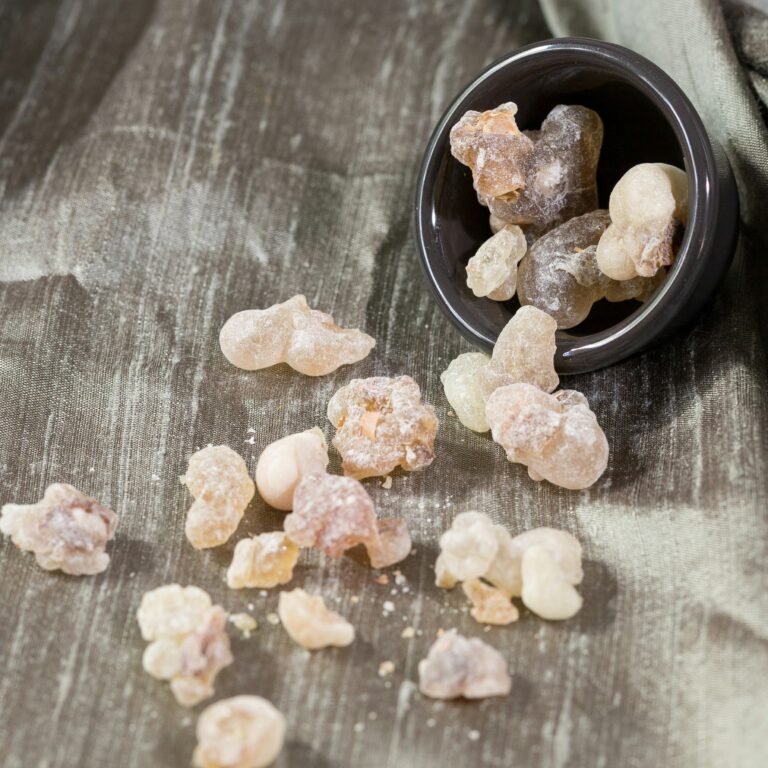
- 2 drops frankincense
- 1 drop lemon
- Fractionated coconut oil to fill
Shake to blend. Apply to temples, back of neck, or wrists. Stay well clear of the eye area — peppermint vapors sting. At this ratio you’re sitting at approximately 2.5% dilution, appropriate for adults for occasional use. Frankincense adds a grounding quality that keeps the blend from feeling overly sharp.
Cooling Muscle Rub
What it does: Post-workout or end-of-day muscle support, with peppermint’s cooling action doing the heavy lifting.
What you need:
- 1 oz (30 mL) unscented lotion or fractionated coconut oil
- 5 drops peppermint
- 3 drops lavender
- 2 drops eucalyptus
Mix well in a small glass jar. Apply to sore muscles or joints after activity. The peppermint provides the cooling sensation, lavender softens the blend, and eucalyptus adds depth and respiratory support. This sits at roughly 1.5% dilution — appropriate for regular topical use on adults.
Indigestion Roll-On
What it does: Portable digestive support for after meals, travel, or any time your stomach needs a little help — fits in a purse or pocket.
What you need:
- 10 mL glass roller bottle
- 4 drops peppermint
- 3 drops ginger (warming, traditionally used for nausea and digestive upset)
- 2 drops fennel (supports healthy digestion and eases bloating)
- 1 drop lemon
- Fractionated coconut oil to fill
Shake to combine. Apply to the abdomen in slow clockwise circles — clockwise follows the natural direction of digestion. You can also roll it onto the inside of the wrists and inhale, which layers in an aromatic component on top of the topical. At approximately 2.5% dilution, this is appropriate for regular adult use. The ginger brings warmth that complements peppermint’s cooling action — they balance each other in a way that neither does alone.
If you’re making this as a travel blend, keep the roller cap tight and store it upright. A 10 mL bottle fits easily in a makeup bag or jacket pocket and is TSA-friendly in carry-on luggage.
Note for pregnant readers: both peppermint and fennel carry pregnancy cautions. Skip this one and check with your care provider before using either oil during pregnancy.
Questions People Ask About Peppermint Oil
What’s the best way to use peppermint for focus if I don’t have a diffuser?
A personal inhaler is my go-to. It’s a small cotton wick inside a narrow tube — available from most oil suppliers. Add 15 drops of your focus blend to the wick, cap it, and inhale directly when you need a quick hit of clarity. Discreet, portable, and doesn’t affect anyone else in the room. You can also just uncap the bottle and hold it 6–12 inches from your nose for a few slow breaths — no equipment needed.
Does the dilution ratio change depending on which carrier oil I use?
The ratio stays the same — what changes is the feel of the finished blend. Fractionated coconut oil is light and absorbs quickly, which makes it great for roll-ons. Regular coconut oil is thicker and works better in salves and rubs. Jojoba absorbs really cleanly and is a good all-purpose choice for blends you’ll use often. The important number is how many drops of essential oil you’re adding per teaspoon of carrier — that stays consistent regardless of which carrier you choose.
Can I use peppermint oil every day?
For aromatic use, yes — most people tolerate daily diffusion without issue. For topical use, rotating between oils and giving your skin occasional rest periods is a good habit with any essential oil, peppermint included. If you notice your skin becoming sensitized — reacting more strongly than it used to — dial back and give it a break.
Is it safe to diffuse peppermint around cats and dogs?
Use real caution here. Peppermint aromatherapy can be toxic to cats, and dogs are more sensitive to essential oils than humans in general. If you’re diffusing in shared spaces, keep the room well-ventilated and make sure your animals can leave freely. For rooms where cats spend most of their time, I’d swap peppermint for something gentler in the diffuser.
How do I know if the peppermint oil I’m buying is actually pure?
Look for oils that tell you exactly what’s in the bottle: the full plant name (Mentha × piperita), the extraction method (steam distillation), and third-party lab test results you can actually look up. The label “therapeutic grade” sounds official, but it’s not a regulated term — any company can print it. What actually tells you something is whether they’re willing to show you the test results. The oils I use from Young Living come with what they call Seed to Seal documentation — it tracks the oil from the farm through distillation and independent testing. That kind of transparency is what I look for.
What do I do if peppermint oil gets near my eyes?
Flush immediately with a carrier oil — fractionated coconut oil, olive oil, whatever you have close by. Not water. Oil disperses oil; water pushes it around and makes the irritation worse. It’s uncomfortable but typically resolves within a few minutes. This is a good reminder to always wash your hands after applying any blend, and to keep roll-ons well clear of the eye area.
What about the peppermint tea — is one drop really enough?
More than enough, honestly. One drop of peppermint essential oil is roughly equivalent to 28 cups of peppermint tea made from leaves. It’s that concentrated.
I add one drop to a large mug of hot water after dinner or whenever my stomach feels unsettled, and it’s become one of my most-used applications — more so than the diffuser blends, if I’m being straight with you. Start with even less if you’re new to it: dip a toothpick into the bottle, swirl it in the water, and taste before adding more. Make sure you’re using a quality oil — this is not the moment for a bargain-bin bottle. And if you have acid reflux or GERD, give this one a pass, since peppermint can aggravate those conditions.
Now Go Make Something
Peppermint is one of those oils that rewards people who actually use it. The history is interesting, the science is solid — but the real payoff comes when you’ve got a roll-on in your bag, a diffuser blend running at your desk, and a bottle on the kitchen counter for after dinner.
Start with one recipe. See how it works for you. Tweak the ratios. Keep notes. That’s how a good blend turns into a great one — and how one bottle of peppermint turns into something you reach for every single day.
For more recipes, and deep dives into individual oils, sign up and get our From Toxic to Tranquil guide. It is a free, practical guide to cleaning your home with essential oils — it’s built to be the resource I wished I had when I was just getting started.
Quick-Reference Blend Card
All four recipes at a glance — save this, screenshot it, pin it up wherever you make your blends.
| Recipe | Oils & Drops | Base | Best For |
| Morning Focus Diffuser | 3 peppermint · 2 rosemary · 1 lemon | Diffuser + water | Sharper focus & morning energy |
| Clear Head Roll-On | 2 peppermint · 2 frankincense · 1 lemon | 10 mL roller + FCO | Mental fog, mid-day slump |
| Cooling Muscle Rub | 5 peppermint · 3 lavender · 2 eucalyptus | 1 oz lotion or FCO | Sore muscles after activity |
| Indigestion Roll-On | 4 peppermint · 3 ginger · 2 fennel · 1 lemon | 10 mL roller + FCO | Stomach upset, after meals |
FCO = Fractionated Coconut Oil · All topical blends: dilute before skin use · Pregnant? Skip the Indigestion Roll-On and check with your provider before using peppermint or fennel.
A quick note before you go: I’m not a doctor or certified aromatherapist — just someone who’s done a lot of reading and a fair amount of experimenting. Nothing in this article should be taken as medical advice. Essential oils are powerful and worth learning about, but if you have a serious health condition, please talk to a qualified healthcare provider. Always dilute before applying topically, and do a patch test first. These statements have not been evaluated by the Food and Drug Administration. Essential oils are not intended to diagnose, treat, cure, or prevent any disease.
— Max